Budget Summary: John Healey Delivers Key Tax, Spending & Support Measures
Wednesday 28 October, 2026
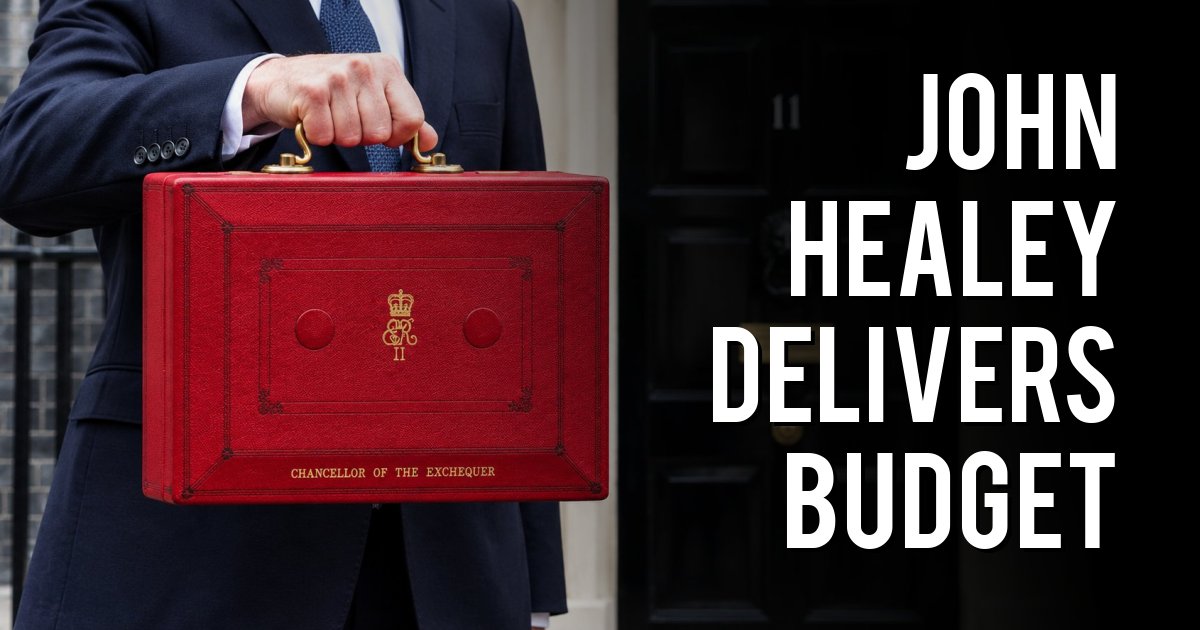
The government has announced a range of tax changes, financial support measures and public spending commitments in its latest Budget, setting out plans intended to help households manage rising costs, support businesses and invest in communities across the UK. Chancellor John Healey presented the proposals in the first Budget since Andy Burnham became Prime Minister. Here is a straightforward overview of the main announcements and what they cover.
Support for households and motorists
- £100 payment for households: Around 20 million households in council tax bands A to D in England will receive a £100 payment to help with rising energy bills. Equivalent funding will be provided for Scotland, Wales and Northern Ireland.
- Removal of gas standing charges: The fixed daily fees households pay for gas, regardless of how much they use, will be scrapped. The associated costs will instead be incorporated into the unit rate.
- VAT reduction on electricity bills: The VAT cut on electricity bills will be extended beyond April and continue until July.
- Fuel duty freeze: The existing freeze on fuel duty will be extended again, this time until July.
- Import tax reductions: Import taxes will be removed on more than 100 food products, including gherkins and marmalade, as well as on kerosene and fertilisers.
- Tax-free mileage allowance: The tax-free mileage rate of 55p per mile for people driving up to 10,000 miles a year for work will become permanent. For business mileage above 10,000 miles, the rate will increase from 25p to 35p per mile.
Pensions, wages and family support
- Income tax relief for low-income pensioners: A new tax-free allowance will ensure pensioners whose income is no higher than the value of the full new State Pension will not have to pay income tax.
- Increase in the minimum wage: The legal minimum wage for workers will rise by 3.9%.
- Changes to Carer's Allowance: Unpaid carers will no longer lose their entire Carer's Allowance if their earnings exceed £204 a week after tax. A tapered reduction will be introduced instead.
- Extended parental pay: Parental pay will be extended to self-employed fathers and parents in same-sex couples.
Savings, ISAs and First-Time Buyer Support
- ISA changes: The planned reduction in the annual Cash ISA allowance from £20,000 to £12,000 for under-65s from April 2027 is expected to be reversed, allowing the existing £20,000 limit to remain.
- First Time Buyer ISA: A new savings account is planned to replace the Lifetime ISA, aiming to make it easier for first-time buyers to save towards a property deposit.
- Your First Home scheme: A proposed scheme will help eligible first-time buyers in England purchase new-build homes with deposits as low as 2.5%, supported by a government-backed equity loan of up to 20%.
- Changes affecting savers: Planned ISA rule changes from April 2027 could affect how under-65s hold cash savings within Stocks and Shares ISAs and transfer money between different ISA types.
Measures affecting businesses and banks
- Higher surcharge on bank profits: The surcharge banks pay on their profits will increase from 3% to 6% for a period of 15 months, beginning in January.
- Higher business rates threshold for shops: In England, the threshold at which high street shops begin paying business rates will rise from £12,000 to £18,000. This means businesses occupying properties with a rateable value below £18,000 will not pay business rates.
Housing and homelessness funding
- Additional investment in affordable housing: A further £1 billion will be allocated to social and affordable housing in England, bringing total funding for the 10-year programme to more than £40 billion.
- More help for rough sleepers: An additional £432 million will be provided for a programme designed to give every rough sleeper in England a route off the streets by Christmas.
Greater financial powers for local and regional leaders
- Keeping more business rates locally: All business rates will be retained locally by the end of the decade. Mayors will begin keeping 20% of the revenue from next year.
- A share of income tax revenue: Mayors will receive a share of income tax receipts from 2028.
- Greater regional spending powers: Regional bodies and mayors across England will be given more control over spending decisions. This will begin with £285 million next year for priorities including housing, transport and high streets.
- New borrowing facility: The government will work with mayors to develop a £1.5 billion borrowing facility, helping them finance larger investment projects.
Investment in AI and tackling misogyny
- More than £600 million for AI-related projects: The government will invest more than £600 million in projects connected with artificial intelligence (AI). This includes an additional £120 million for the UK's AI Security Institute and £100 million for a national AI Biosecurity Lab.
- £15 million to tackle misogyny: A dedicated fund to address misogyny in schools, workplaces and communities will receive £15 million.
What the Budget announcements mean
The Budget brings together measures covering household bills, motoring costs, pensions, wages, business taxation and investment in local communities. It also commits additional funding to affordable housing, homelessness support, artificial intelligence and efforts to tackle misogyny.
The practical impact of these announcements will depend on how the measures are implemented, when they take effect and how individual households, workers and businesses are affected. Keeping track of the details will help people understand which changes may be relevant to their own circumstances.